Achille Mbembe needs no introduction to us. Based at the Wits Institute for Social and Economic Research, University of Witwatersrand, he is one of the foremost thinkers on the question of postcoloniality and contemporary politics on the African continent. Mbembe was Assistant Professor of History at Columbia University, New York (1988-1991), a Senior Research Fellow at the Brookings Institute in Washington, D.C. (1991-1992), Associate Professor of History at the University of Pennsylvania (1992-1996), Executive Secretary of the Council for the Development of Social Science Research in Africa (CODESRIA) in Dakar, Senegal (1996-2000). He was also a Visiting Professor at the University of California, Berkeley (2001), at Yale University (2003), at the University of California at Irvine (2004-2005), at Duke University (2006-2011) and at Harvard University (2012). He is the recipient of an Honorary Doctorate from the University of Paris VIII (France) and Universite Catholique de Louvain (Belgium). He has also held the Albert the Great Chair at the University of Koln (2019) and was an Honorary Professor at the Jakob Fugger-Zentrum, University of Augsburg (Germany). He has been awarded numerous awards including the 2015 Geswichter Scholl-Preis, the 2018 Gerda Henkel Award and the 2018 Ernst Bloch Award.
His seminal books include On the Postcolony (University of California Press, 2001), Critique of Black Reason (Duke University Press, 2016), Necropolitics (Duke University Press, 2019) and Out of the Dark Night: Essays on Decolonization (Columbia University Press, 2020). His address to this workshop on modern heritage of Africa problematises the idea of modernity in Africa, particularly its Eurocentric and colonial roots. In his address he poses the question of whether heritage in Africa can be understood without reference to its Eurocentric modern origins, and if so what kind of concept of heritage will that entail for futures yet to come on the African continent that is intimately linked to the rest of the world.
Dipesh Chakrabarty is currently the Lawrence A. Kimpton Distinguished Service Professor in History, South Asian Languages and Civilizations, and the College at the University of Chicago. He is the Faculty Director, University of Chicago Center in Delhi, a faculty fellow of the Chicago Center for Contemporary Theory, an associate of the Department of English, and by courtesy, a faculty member in the Law School.
His distinguished career includes founding member of the editorial collective of Subaltern Studies, consulting editor of Critical Inquiry and founding editor of Postcolonial Studies. He has made profound contributions to the intersections between history and postcolonial theory and has published widely, including many seminal books: Rethinking Working Class History (1989), Provincializing Europe: Postcolonial Thought and Historical Difference (2000), Habitations of Modernity: Essays in the Wake of Subaltern Studies (2002); The Crises of Civilization: Exploring on Global and Planetary Histories (2018), And, we congratulate him on the very recently published, The Climate of History in a Planetary Age (2021)
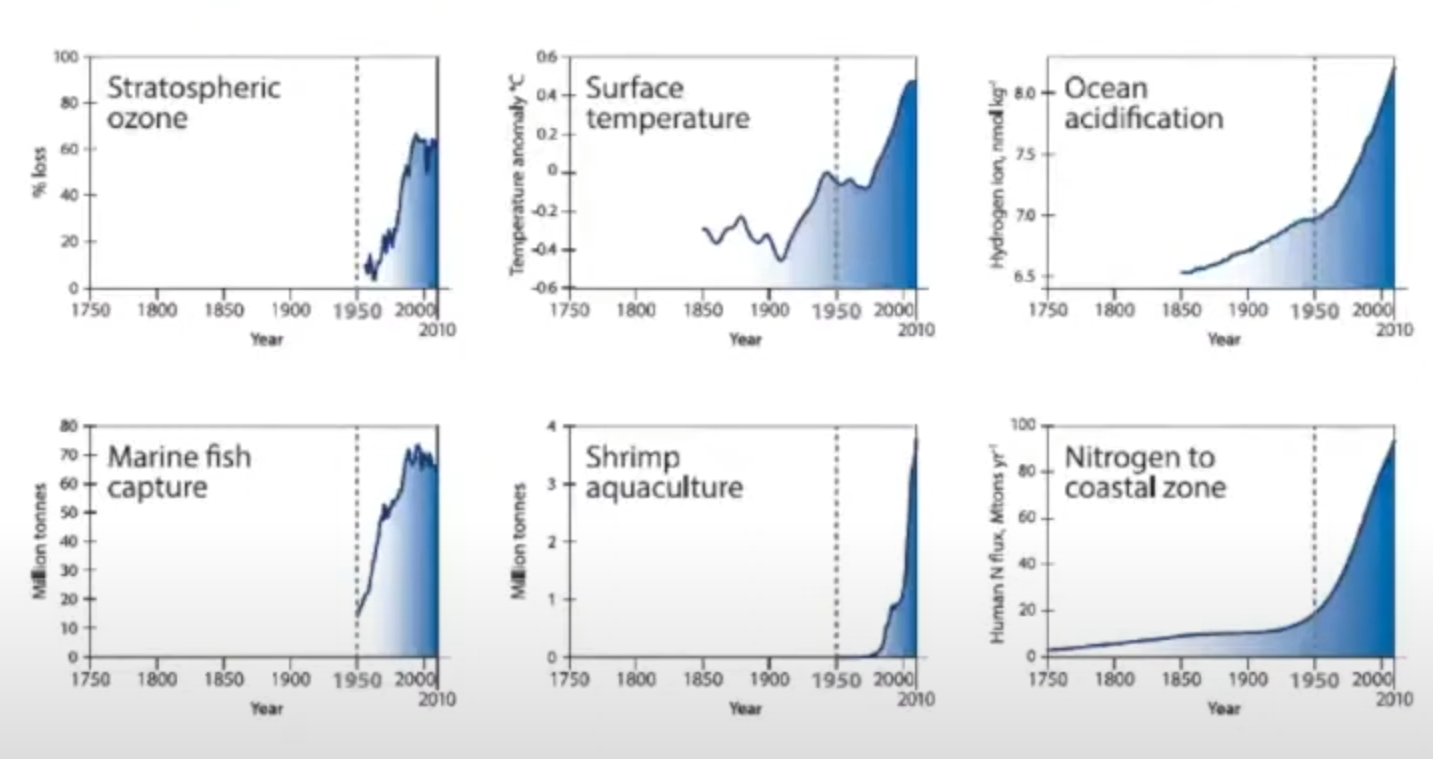
Professor Chakrabathy placed the question of heritage as memory in its multiple manifestations including the interpellation of societal and physical environmental changes over millennia squarely in the current climate crisis. Heritage may well be an important tool to think of our planetary future.